Top Stories
Mining
BLUES OF KANGANKUNDE RARE EARTH MINING PROJECT
July 23, 2026 / Marcel Chimwala
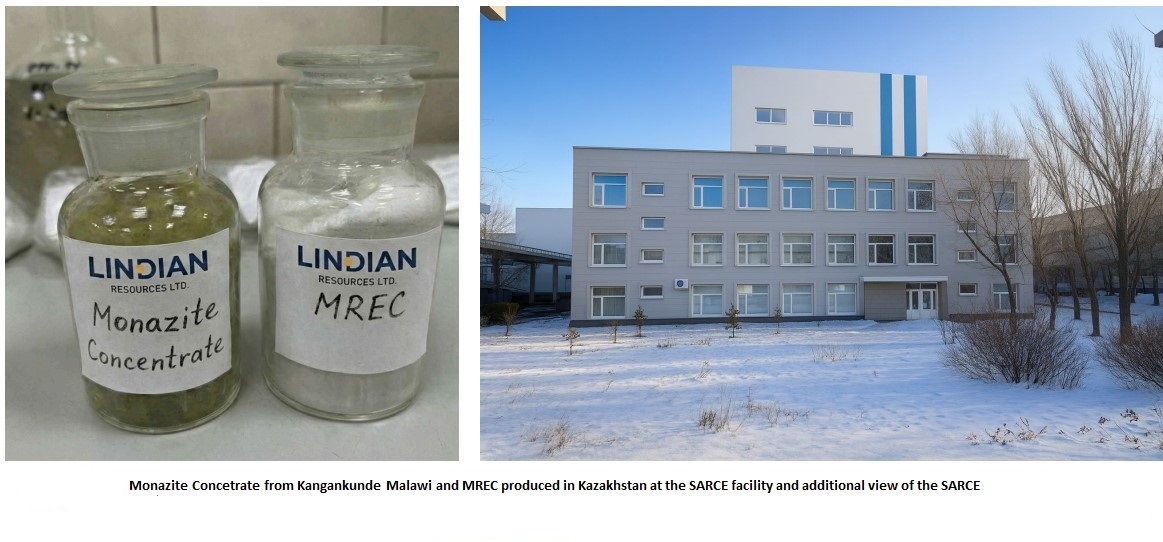
Located in Balaka off the M1 road junction close to Senzani Trading Centre, Kangankunde mine is expected to open in November this year to become Malawi’s first rare earth mine. This appears like an economic milestone that Malawians were supposed to be celebrating. But the reality on the ground is different with business leaders painting a good picture of the project while a cross section of Malawians appear not convinced that the project will bring expected economic returns to locals.
Topical issues include that Australian-listed Lindian Resources is operating as a local company Rift Valley Resource Developments using a medium scale mining licence to run the globally significant project. This type of licence legally does not mandate the Company to sign a Mine Development Agreement that includes an equity sharing agreement with the Malawi Government and a Community Development Agreement with the local community.
Lindian is planning to launch commercial export of monazite concentrate to Kazakhstan for downstream processing in November this year, which is also sparking questions from Malawians on the project failing to meet the nation’s local value addition ambitions highlighted in Malawi 2063. I captured contrasting views from two commentators. Excerpts:
Michael Aldworth, CEO Farming & Engineering Services
Morning Marcel
I have followed with interest the recent series of articles published by Mining & Trade Review concerning the Kangankunde Rare Earth Project and the broader debate around how Malawi should benefit from its mineral resources.
Firstly, I would like to commend Mining & Trade Review for stimulating what is clearly an important national conversation.
The questions being raised around licensing, government participation, community benefits and value addition are legitimate issues that deserve public scrutiny and discussion.
However, I wonder whether there is an equally important aspect of the debate that has perhaps not received the same level of attention.
Many commentators have rightly argued that Malawi should not simply export raw minerals and should instead pursue greater local processing and beneficiation. As a principle, I believe most Malawians would agree with this objective. The question, however, is not whether we would like to see more processing take place in Malawi, but rather what conditions are required to make such processing commercially viable.
Rare earth processing is not a simple extension of mining. It requires reliable electricity, significant water resources, advanced chemical processing capability, specialist technical skills, environmental management systems and substantial supporting infrastructure. These are not obstacles unique to Malawi, but they are realities that every developing country seeking industrialisation must confront.
Perhaps the more important national discussion is therefore not whether companies should be encouraged to process minerals locally, but what Malawi must do to become a location where such investment naturally makes economic sense.
If Malawians wish to see processing plants, refineries, manufacturing facilities and higher-value industries established within our borders, then we must also ask difficult questions about energy security, transport infrastructure, industrial policy, foreign exchange availability, regulatory certainty and investment attractiveness.
As someone who has worked in Malawi for many years, I firmly believe the country possesses enormous potential. We have fertile land, mineral resources, a strategic location and a resilient population. What we need now is a national conversation that focuses not only on what investors should do for Malawi, but also on what Malawi must do to attract and retain the scale of investment required to transform the economy.
The Kangankunde project should therefore be viewed not only as a mining project, but also as an opportunity to have a broader discussion about industrialisation, infrastructure development and economic growth.
Ultimately, the goal should be the same for all stakeholders: ensuring that Malawi receives maximum long-term benefit from its natural resources while remaining a destination where investors have the confidence to commit capital, create jobs and contribute to national development.
Ronald Banda, Our Facebook follower
Open dialogue is important, particularly for a project of such national significance. However, several issues remain insufficiently addressed and continue to warrant legitimate public scrutiny.
Firstly, while Lindian argues that it is legally operating under a medium-scale mining licence because it does not yet meet the thresholds for a large-scale licence, many Malawians find it difficult to reconcile this position with repeated reports indicating that Kangankunde contains one of the world's most significant rare earth deposits. If the resource potential is indeed as substantial as has been presented to investors and international markets, then it is reasonable for citizens to ask what the long-term operational plan is and when the project is expected to transition from medium-scale operations to large-scale mining. Transparency on this matter would help build public confidence.
Secondly, Lindian's response does not adequately address the question of future ownership and participation by Malawians. Mining projects of strategic national importance should not only generate royalties and taxes but should also create pathways for meaningful local equity participation, whether through Government shareholding, pension funds, local institutions, or eventual listing on the Malawi Stock Exchange. The public deserves clarity on whether such opportunities are being considered and, if so, under what timeline.
Thirdly, while Lindian correctly points to infrastructure challenges relating to power, water, and industrial processing, the Company should adopt a more proactive approach. Historically, successful mining companies across the world have not merely adapted to existing infrastructure limitations; they have actively partnered with governments and development partners to develop the infrastructure necessary for long-term industrial growth. If roads can be constructed to support mining operations, then discussions around power generation, transmission, water systems, and industrial processing facilities should also form part of a broader development strategy for the region.
On downstream processing, the technical arguments advanced by Lindian may be valid in the short term. However, Malawians are justified in asking for a clear roadmap showing how value addition will progressively increase within Malawi. Exporting concentrate today may be commercially necessary, but what matters is the long-term vision. Citizens would like to see a phased plan demonstrating how processing capacity, skills transfer, technology transfer, and local industrial participation will be developed over time, with the ultimate goal of retaining a greater proportion of value within Malawi. A target of achieving significant local value addition in the medium to long term would be a positive commitment.
It is also important to address the suggestion that questioning aspects of the project could discourage investment. Such arguments should be approached with caution. Investors are not frightened by informed public debate; they are attracted by transparency, stability, good governance, and predictable regulatory environments. Citizens asking questions about their country's natural resources should not be made to feel guilty or portrayed as obstacles to investment. Africa's history contains numerous examples where natural resources generated enormous wealth but delivered limited benefits to local populations. It is therefore understandable that Malawians are taking a keen interest in ensuring that Kangankunde becomes a model of responsible and inclusive development rather than a repetition of past mistakes.
The conversation surrounding Kangankunde should not be framed as a conflict between investors and citizens. Rather, it should be viewed as a search for the best possible outcome for all stakeholders. Lindian deserves recognition for the investments and community projects it has undertaken thus far. Equally, Malawians have a right and responsibility to seek clarification on issues relating to licensing, ownership, value addition, infrastructure development, and long-term national benefits.
Ultimately, the objective is not to oppose investment but to ensure that the exploitation of Malawi's rare earth resources contributes meaningfully to economic transformation, job creation, industrialisation, technological advancement, and shared prosperity. Constructive questioning and accountability should therefore be welcomed as part of building a mining sector that serves both investors and the people of Malawi.
Share this:
Leave a Comment
Comments
Mining & Trade Review News

Agribusiness News

Subscribe to Newsletter
Rehabilitation:
The establishment of a stable and self-sustaining ecosystem, but not necessarily the one that existed before mining began. In many cases, complete restoration may be impossible, but successful remediation, reclamation, and rehabilitation can result in the timely establishment of a functional ecosystem.
Archives
Remediation:
The cleanup of the contaminated area to safe levels by removing or isolating contaminants. At mine sites, remediation often consists of isolating contaminated material in pre-existing tailings storage facilities, capping tailings and waste rock stockpiles with clean topsoil, and collecting and treating any contaminated mine water if necessary.
Stakeholders Logos